Is my nose big? Check it against your own face
Is my nose big is a question about proportion, so this check answers it with your own face as the ruler. It measures your nose width against the gap between your eyes and against your face width, and your nose length against your lower face, then shows how many real adults meet each of those rules.
Check if your nose is big for your face
Front-facing photo, even light, hair off the forehead
- Nose width, wing to wing
- The gap between the inner eye corners
- Face width at the cheekbones
- Nose length, against the lower face below it (grey)
Your own three comparisons replace this diagram once a photo is measured.
How to tell if your nose is big for your face
- Measure it against your own face. A nose is big or small only next to the eyes, cheeks and chin around it, so every comparison here is a ratio between two parts of the same face.
- Start with the eye gap. Nose width equal to the distance between the inner eye corners is the rule with the most published data behind it, from several populations.
- Expect to miss a rule or two. The rules come from Renaissance drawing, and when Farkas measured real people in 1985 he wrote that they do not represent average facial proportions.
- Take the photo from further away. A close phone camera changes how a nose looks, so a picture from 1.5 metres or more is the fair one to judge.
The three rules, and how many real faces meet them
The first two are neoclassical canons that the anthropometrist Leslie Farkas tested on 153 young North American white adults in 1985. The third is one pair from the equal-thirds rule. His own summary was blunt: the canons do not represent average facial proportions. That is why this check shows a match rate next to each rule where one has been published, rather than a pass or fail. Nose width here is measured at the outer edge of the wings, the point anthropometrists call the alare. Our golden ratio face test measures across the nostril edges instead, so its nose-to-eye number reads lower for the same face.
| Rule | Ratio | How many real faces meet it | Best for |
|---|---|---|---|
| Nose width equals the eye gap | 1.00 | In 103 North American white adults, 41% matched this rule and 38% had a wider nose. In 100 African American adults, 94% had a wider nose (Farkas 2000). | Judging width from a photo: both widths sit close together in the middle of the face |
| Nose width is a quarter of face width | 0.25 | 37% of 153 young white adults matched it (Farkas 1985), and 51.5% of a Han Chinese sample (Wang 1997). | A second opinion on width, less exact because the face edge is hard to place |
| Nose length equals the lower face | 1.00 | This pair is part of the equal-thirds rule. We found no published match rate for it on its own, so read it as a description only. | Seeing whether a nose reads as long or short; not ideal for a verdict, since no match rate is published for it |
The eye-gap rule is the one to lean on, and the results for it vary a lot between populations, and between men and women in the same one. Among 500 Turkish adults the nose was wider than the eye gap in 50.4% of women and 78.9% of men (Bozkir 2004). In Vietnamese, Thai and Singapore Chinese samples of 60 each, 16.7% to 26.7% matched it, and the nose was wider in 48% to 77% (Le 2002, as tabulated by Jayaratne 2012). A 3D study of 103 southern Chinese adults went the other way: 19.4% matched within 1.5 mm, and only 6.8% had a nose wider than the eye gap (Jayaratne 2012). A nose wider than the eye gap is common in many groups, and a narrower one is common in others.
One fifth of your face, or one quarter?
You will also see nose width given as one fifth of face width. That figure comes from the rule of fifths, which divides the face at eye level into five equal parts and assumes the middle one, the gap between the eyes, equals the nose width. It is a different rule from Farkas's nose-to-face canon, which puts the nose at a quarter of face width measured at the cheekbones. The quarter has match data behind it: 37% of his 1985 sample and 51.5% of a Han Chinese sample (Wang 1997) fitted it. The fifths hold up less well. In 83 women photographed for one study the five fifths came out significantly unequal (Milutinovic 2014).
Our own 16 sample faces measured between 0.25 and 0.31 of face width at the cheekbones, and none came within 10% of one fifth. They are AI generated, so this describes the image model rather than people.
16 sample faces, measured against the same rules
Every card is an AI generated face (not a real person) run through the same check as the tool above. The three numbers are the three ratios, and the colour shows whether each sat close to its rule, above it or below it. The faces closest to the eye-gap rule come first. On the eye-gap rule, 13 of the 16 faces had a nose wider than the eye gap and 2 came within 5% of it. On length, 16 of 16 noses came out shorter than the lower face, with ratios from 0.62 to 0.83.
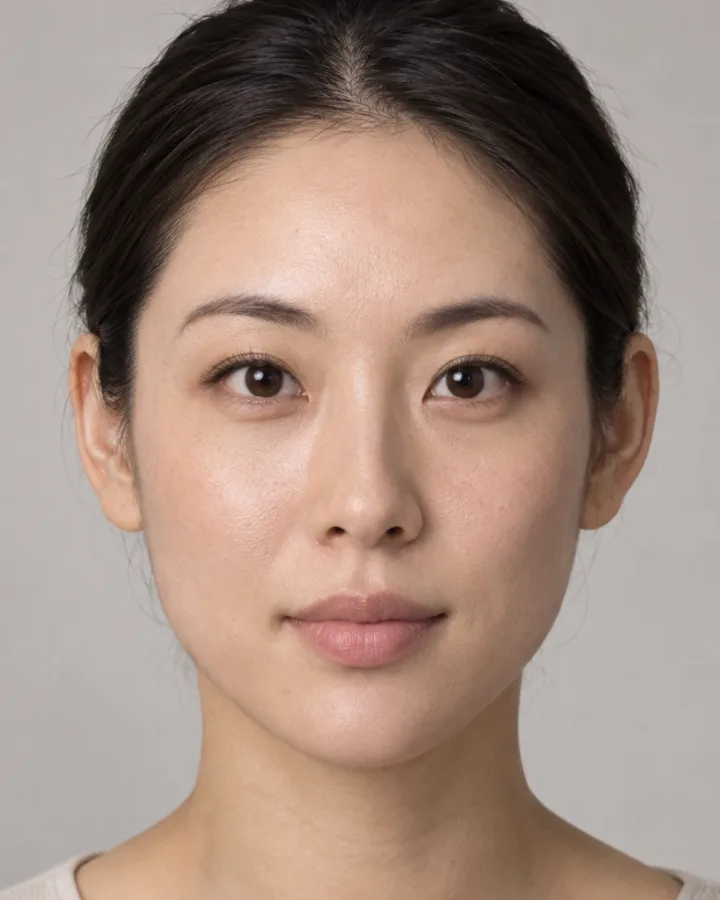
- Width : eye gap
- 1.00
- Width : face
- 0.25
- Length : lower face
- 0.78
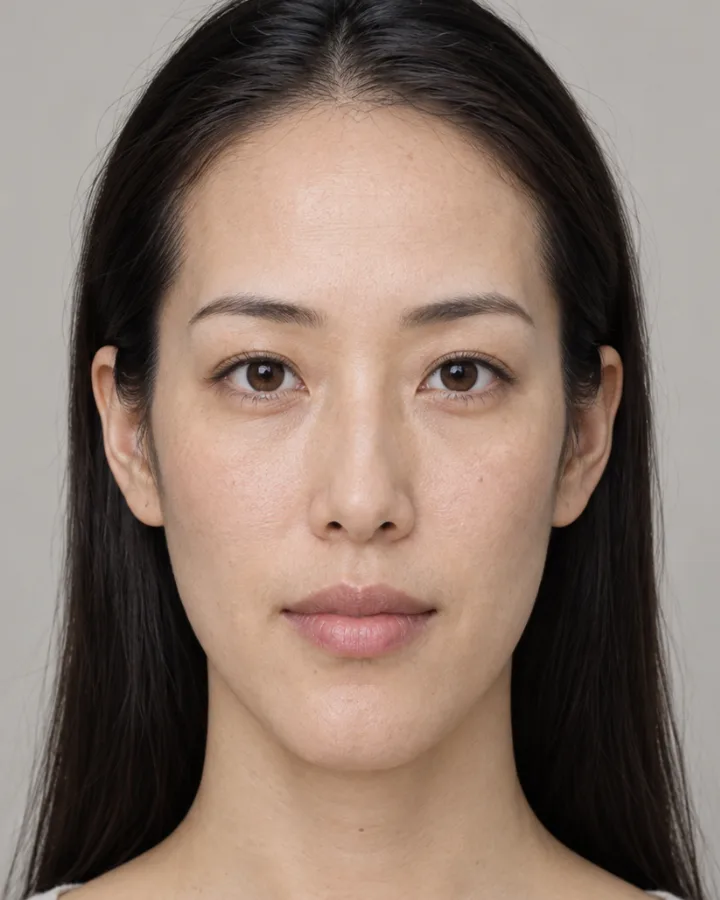
- Width : eye gap
- 1.01
- Width : face
- 0.26
- Length : lower face
- 0.72
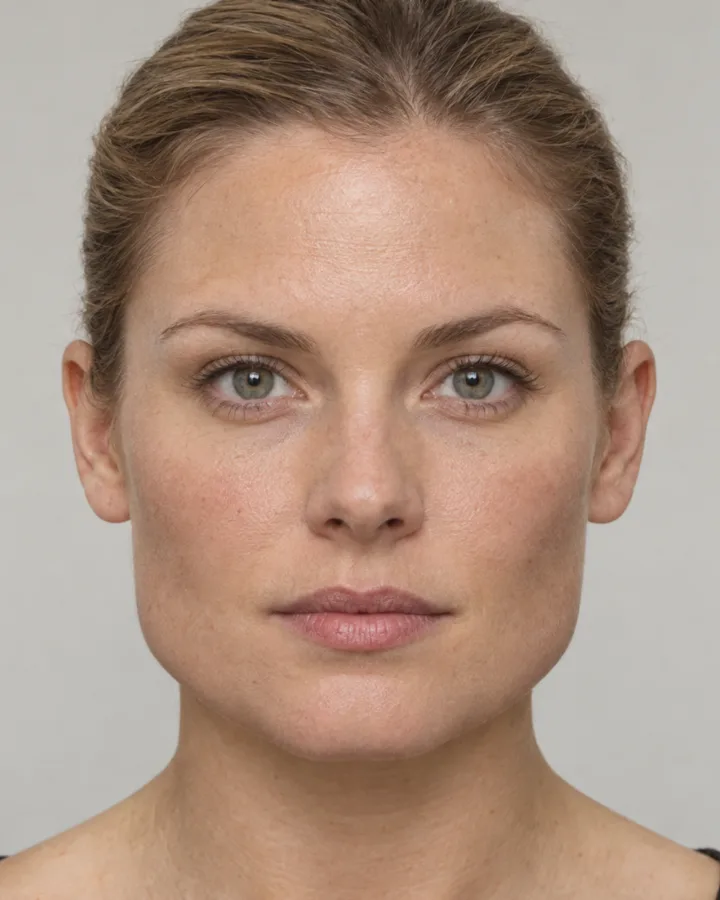
- Width : eye gap
- 1.06
- Width : face
- 0.25
- Length : lower face
- 0.70
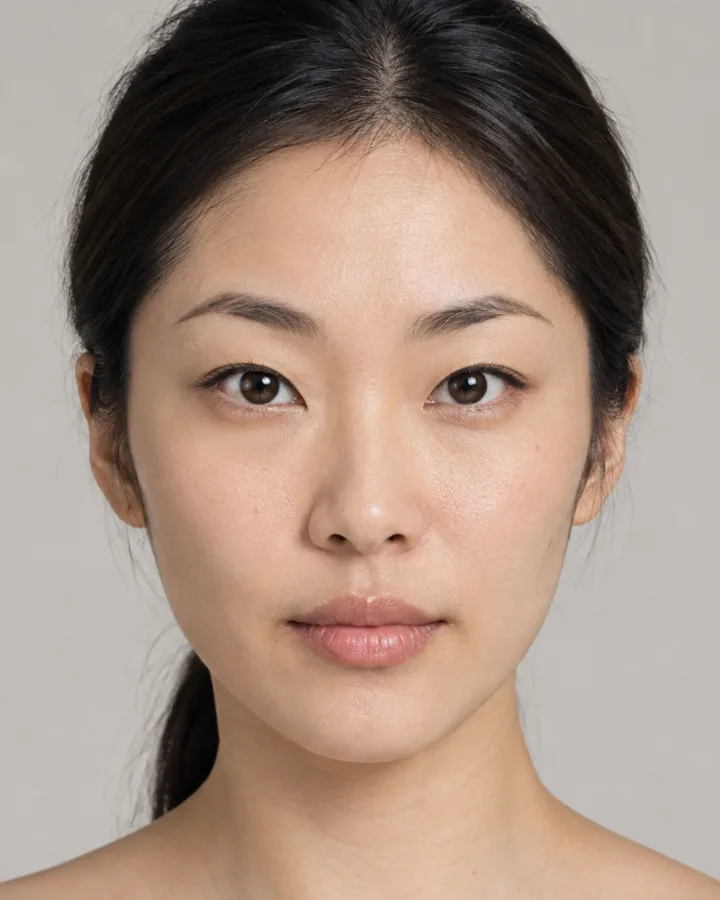
- Width : eye gap
- 0.93
- Width : face
- 0.25
- Length : lower face
- 0.78
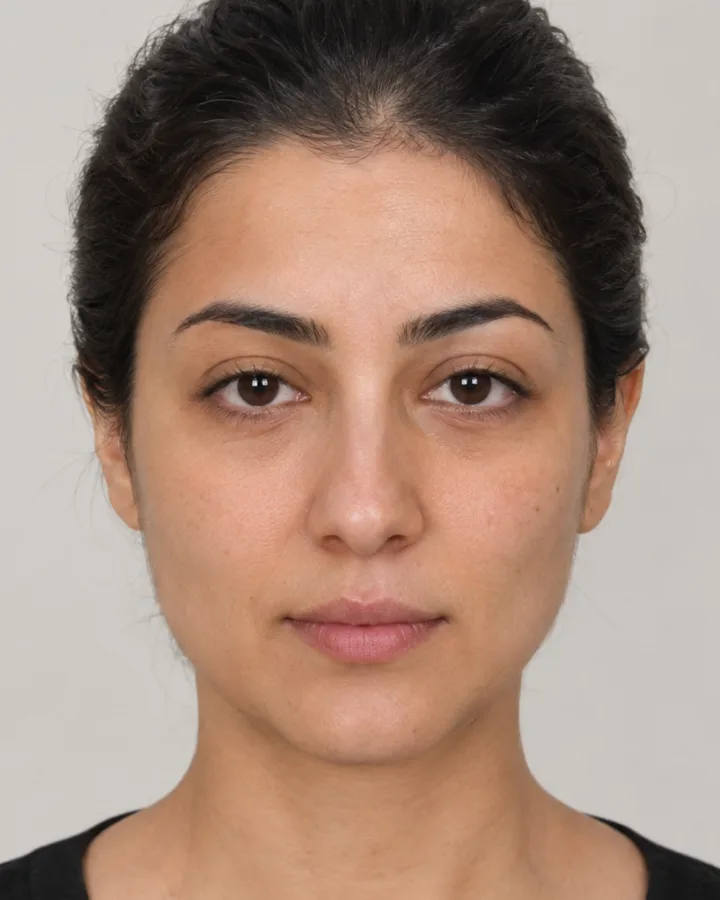
- Width : eye gap
- 1.08
- Width : face
- 0.26
- Length : lower face
- 0.83
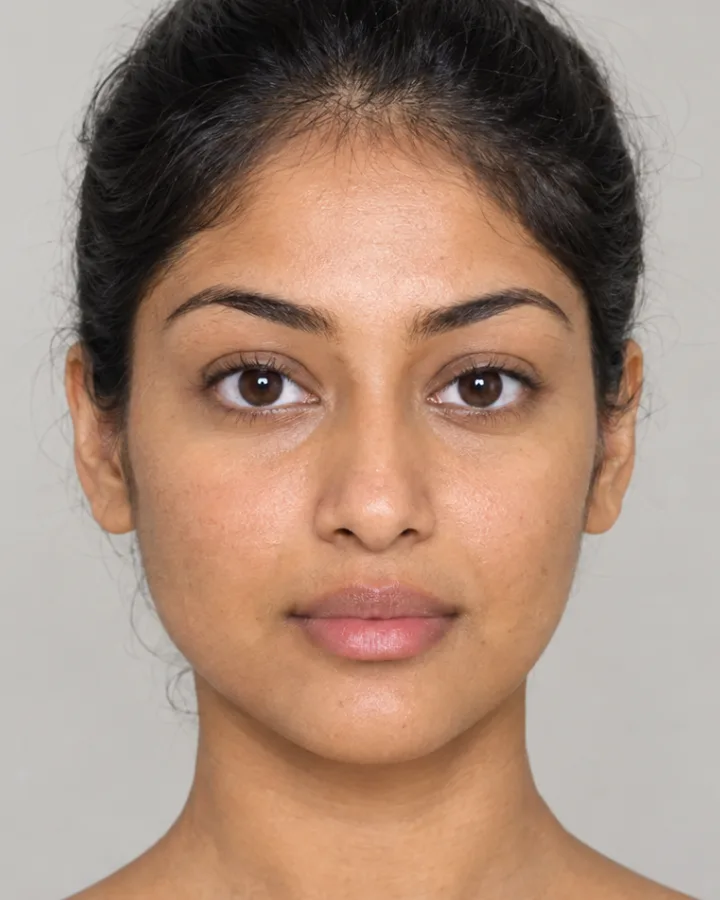
- Width : eye gap
- 1.09
- Width : face
- 0.26
- Length : lower face
- 0.79
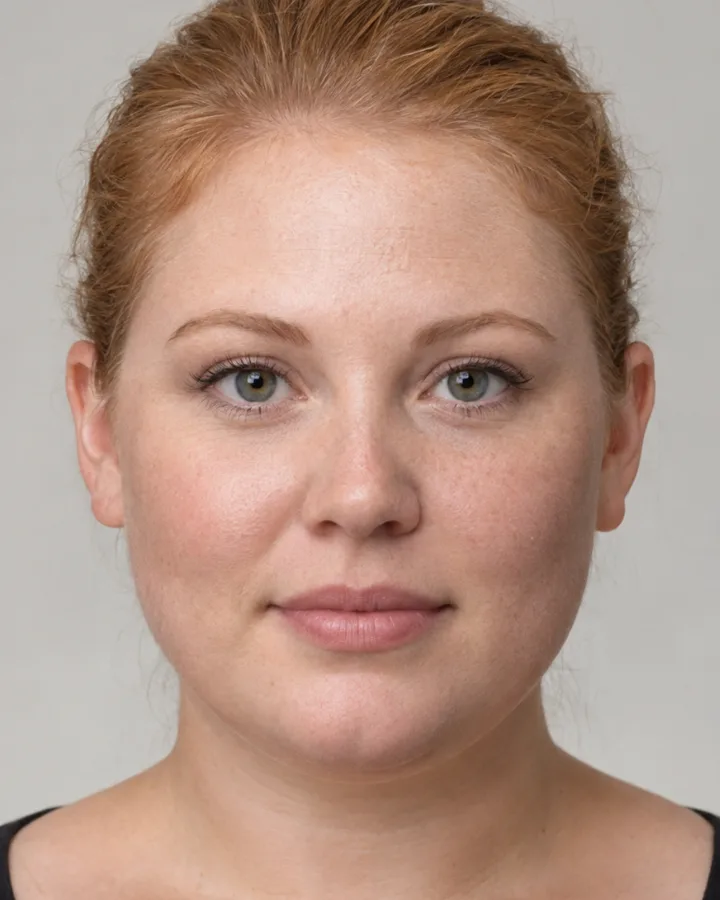
- Width : eye gap
- 1.10
- Width : face
- 0.25
- Length : lower face
- 0.76
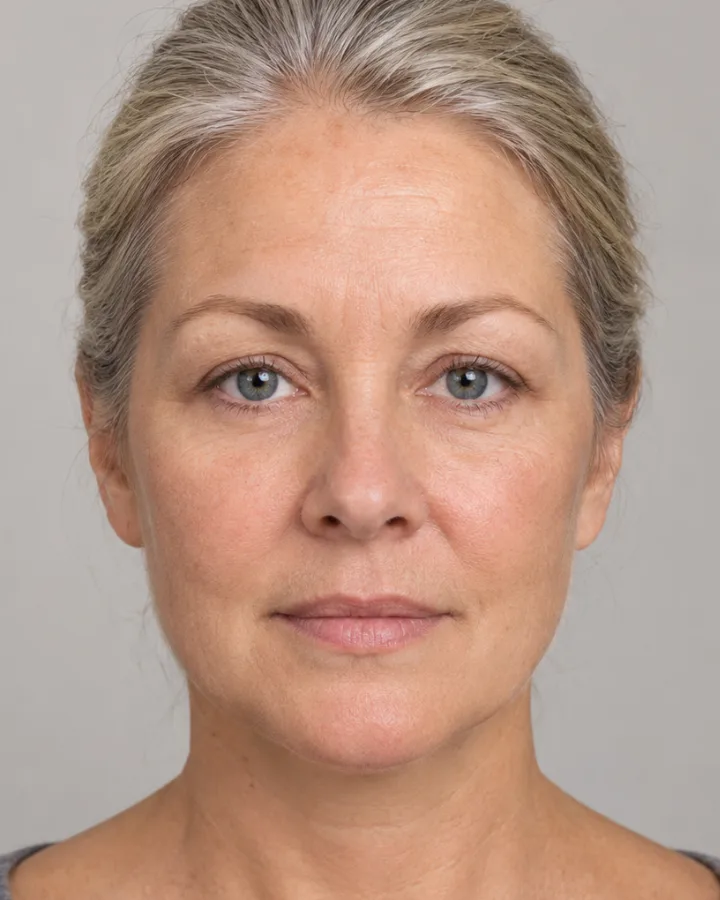
- Width : eye gap
- 1.10
- Width : face
- 0.26
- Length : lower face
- 0.75
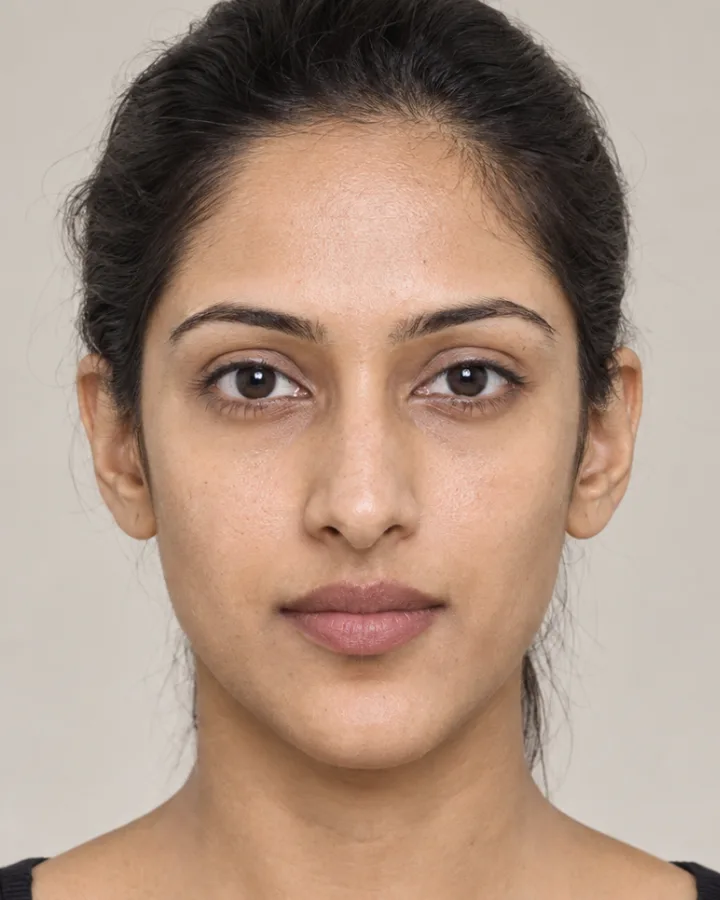
- Width : eye gap
- 1.11
- Width : face
- 0.26
- Length : lower face
- 0.76

- Width : eye gap
- 1.14
- Width : face
- 0.27
- Length : lower face
- 0.67

- Width : eye gap
- 1.15
- Width : face
- 0.27
- Length : lower face
- 0.62
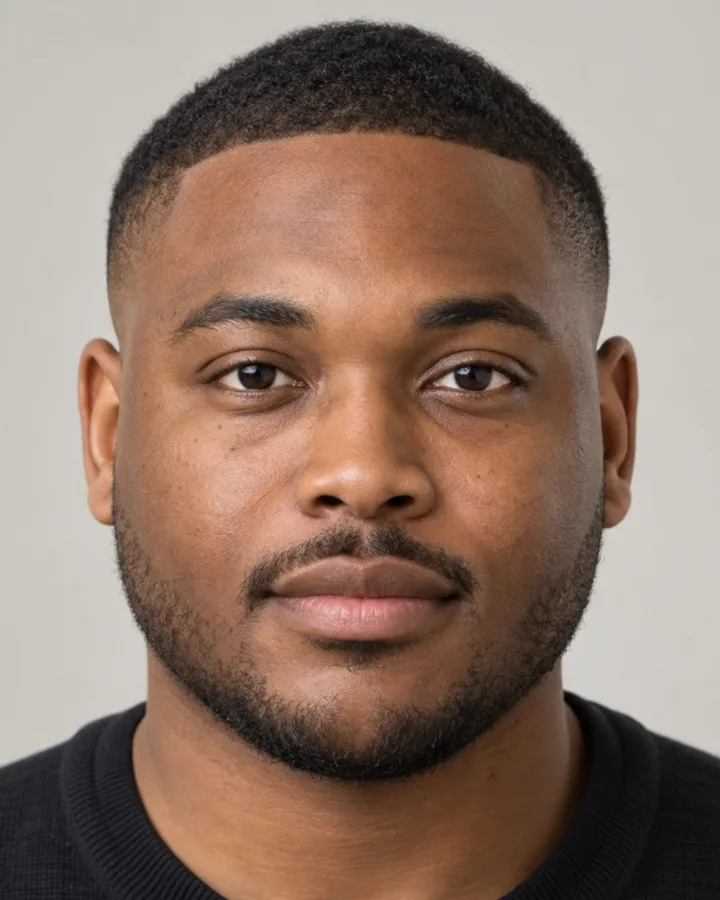
- Width : eye gap
- 1.16
- Width : face
- 0.29
- Length : lower face
- 0.67
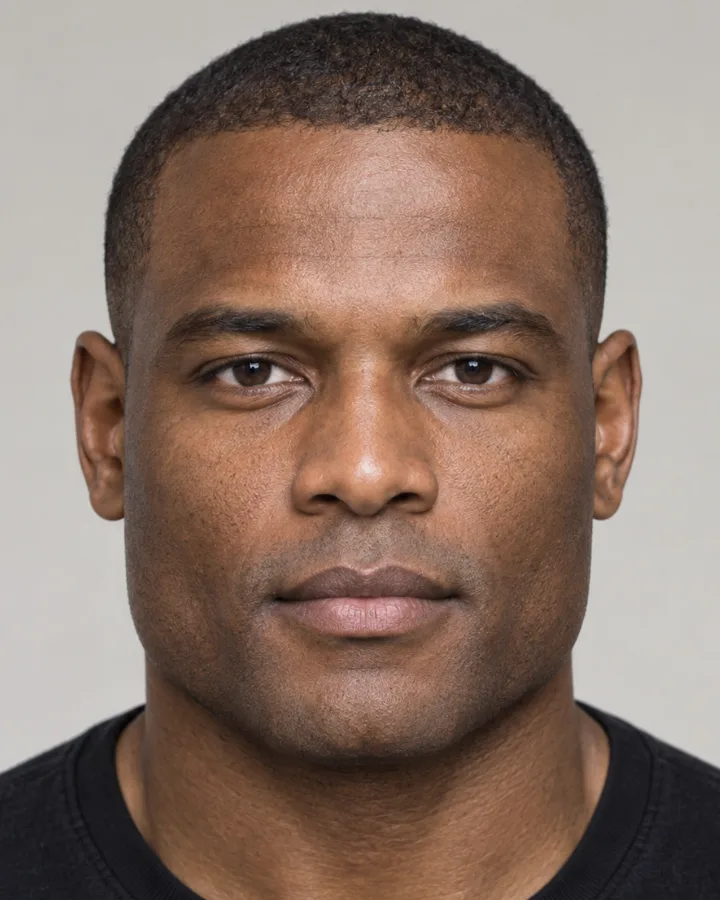
- Width : eye gap
- 1.17
- Width : face
- 0.28
- Length : lower face
- 0.62
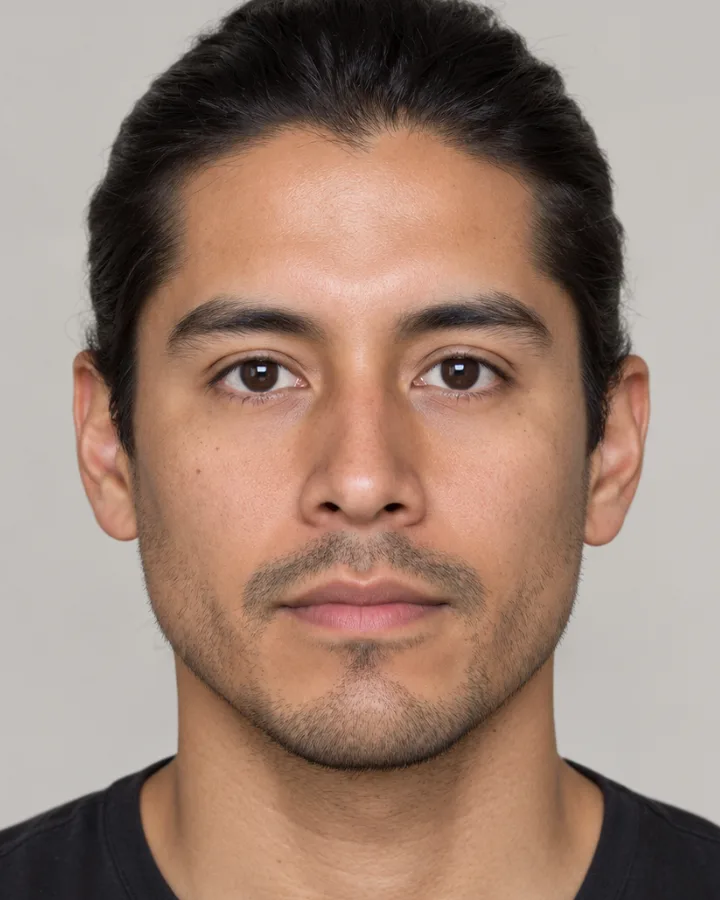
- Width : eye gap
- 1.19
- Width : face
- 0.26
- Length : lower face
- 0.70
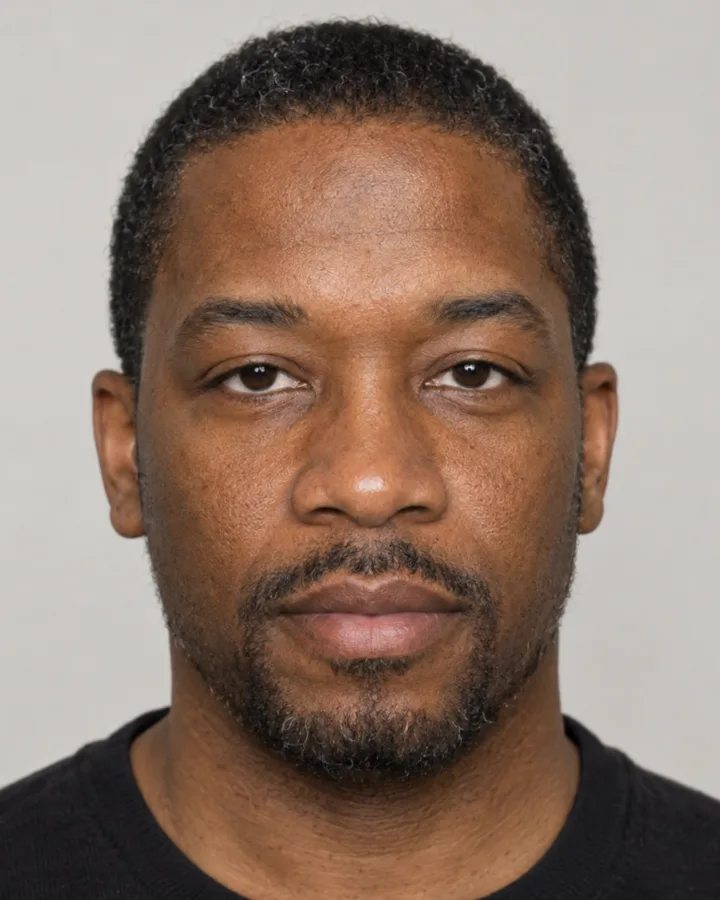
- Width : eye gap
- 1.21
- Width : face
- 0.31
- Length : lower face
- 0.71
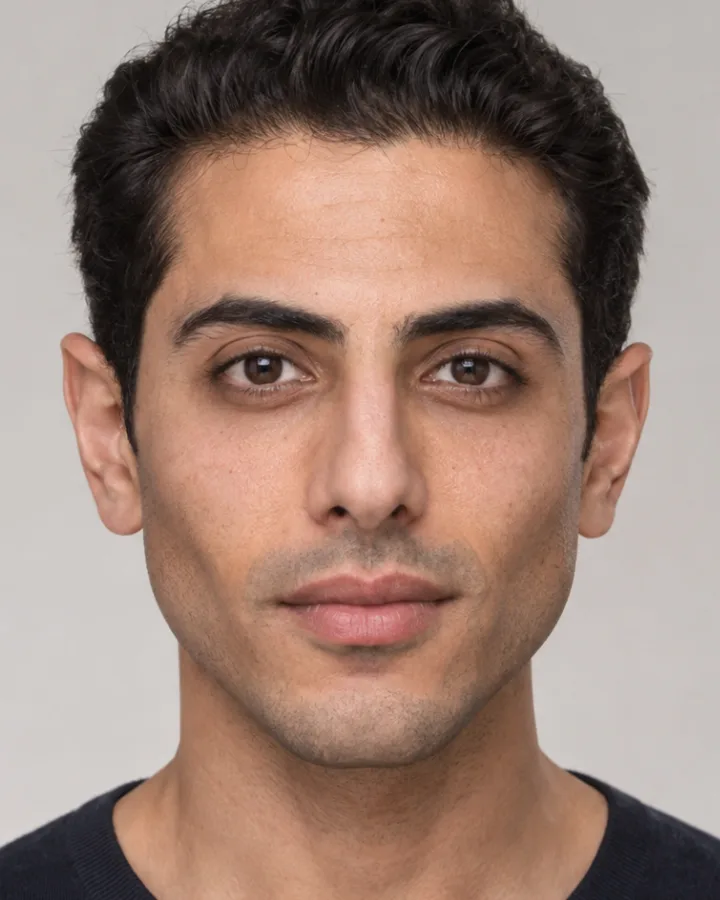
- Width : eye gap
- 1.22
- Width : face
- 0.27
- Length : lower face
- 0.65
Average nose width, in millimetres
If you do want a number in millimetres, these are the published means, with standard deviations in brackets. Each row is its own sample measured with calipers or 3D cameras. The group averages differ by several millimetres and so do people within each group, so a millimetre figure only means something next to the right group.
| Group | Nose width | Inner eye corner gap | Source |
|---|---|---|---|
| North American white men, N=109 | 34.9 (2.1) | 33.3 (2.7) | Farkas norms |
| North American white women, N=200 | 31.4 (2.0) | 31.8 (2.3) | Farkas norms |
| Chinese men, N=30 | 39.2 (2.9) | 37.9 (3.3) | Farkas 2005 |
| Chinese women, N=30 | 37.2 (2.1) | 36.5 (3.2) | Farkas 2005 |
| African American men, N=50 | 44.1 (3.4) | 35.8 (2.8) | Farkas 2007 |
| African American women, N=50 | 40.1 (3.2) | 34.4 (3.4) | Farkas 2007 |
| Kenyan men, N=36 | 43.2 (3.8) | 32.2 (1.9) | Virdi 2019 |
| Kenyan women, N=36 | 40.7 (3.7) | 32.1 (1.4) | Virdi 2019 |
Farkas's own tables are not openly available. The figures above are as reproduced, identically, in three open-access papers that cite them, and the Kenyan figures come directly from Virdi and colleagues (2019). Divide the first two columns and the white and Chinese means land within about 5% of the eye-gap rule.
Is your nose bigger on camera?
The popular answer is yes, by about 30%, and it comes from a real paper. Ward and colleagues (JAMA Facial Plastic Surgery, 2018) built a geometric model of a head and a camera and calculated that at 12 inches the nose looks 30% wider against the face for men and 29% for women than in a photo taken from far away. At 5 feet the difference all but vanished. The paper also quotes a 2017 survey in which 42% of facial plastic surgeons had seen patients who wanted to look better in selfies.
A separate 2022 study photographed 30 real people at different distances (Pressler, Plastic and Reconstructive Surgery, 2022). At 12 inches their noses came out 6.4% longer, and nose width did not change significantly. So the model and the real photos disagree on width, and agree that a close camera changes the face. We have not built either number into the check, because we cannot know how far away your photo was taken. For a fair photo, stand 1.5 metres or further from the camera, or have someone else take it.
Does a nose get bigger with age?
Yes, by a few millimetres. A 3D study of 456 people aged 14 to 83 (Velemínská 2022, Scientific Reports) found the nose lengthened and widened with age. A study of Korean women gives the clearest numbers: average nose width rose from 39.6 mm at ages 20 to 39 to 43.8 mm at 60 to 79, about 11%, while nose height stayed the same in that study (Kwon 2021). Over the same years the width across the outer eye corners fell from 88.8 mm to 82.3 mm, so the nose grew relative to the eyes as well.
What a front photo cannot tell you
Projection
How far a nose stands out from the face is depth, and a single front photo only guesses at depth.
A hump or a curve
The bridge profile, Roman or straight, lives in a side view. The nose shape page explains which names need one.
A turned head
Head tilt is undone before measuring. A head turned to one side makes one wing look wider and cannot be undone.
A smile
A smile can change how wide the nose wings sit. Use a relaxed, closed-mouth photo for a fair width.
Is my nose big? Questions people ask
How do I tell if my nose is big?
+
Compare it with your own face rather than with other people's noses. The classic check is nose width against the gap between your inner eye corners: the old drawing rule says they are equal. A tape measure works in a mirror, and the check at the top of this page does it from a photo. Two things are worth knowing before you read the result. First, the rule is a Renaissance convention, not a medical norm, and in Farkas's measurements of 103 North American white adults only 41% matched it while 38% had a wider nose. Second, among 100 African American adults 94% had a nose wider than the eye gap. Wider than the rule is a very ordinary result.
How wide should my nose be?
+
There is no should, only ranges. Farkas's reference measurements for North American white adults put average nose width at 34.9 mm for men and 31.4 mm for women, each with a standard deviation of about 2 mm. Chinese adults in his 2005 international study averaged 39.2 mm for men and 37.2 mm for women, and African American adults in a 2007 study 44.1 mm and 40.1 mm. So a nose of 38 mm is wide for one reference group and narrow for another. The gap between your inner eye corners is a steadier yardstick, because it comes from your own face, which is why this page leads with it.
Is my nose as big as it looks in pictures?
+
Maybe not, but the evidence is less tidy than the headlines. A 2018 geometric model in JAMA Facial Plastic Surgery calculated that a photo taken from 12 inches makes the nose look about 30% wider against the face for men and 29% for women, compared with a photo from far away, and that at 5 feet the difference all but disappears. A 2022 study in Plastic and Reconstructive Surgery then photographed 30 real people and found something different: at 12 inches the nose came out 6.4% longer, while its width did not change significantly. Both agree on the practical advice. For a fair picture, have someone take it from 1.5 metres or more.
Does your nose get bigger with age?
+
Somewhat, yes. A 3D study of 456 people aged 14 to 83 in Scientific Reports reported that the nose lengthened and widened with age. The clearest numbers come from a study of Korean women: average nose width went from 39.6 mm at ages 20 to 39 to 43.8 mm at ages 60 to 79, about 11% wider, while nose height did not change. Over the same age span the width across the outer eye corners fell from 88.8 mm to 82.3 mm, so the nose also gets larger relative to the eyes around it.
Can a front photo tell if my nose is big from the side?
+
No. From the front a photo shows width and, less reliably, length. Whether a nose projects far from the face, or has a hump along the bridge, is a profile question, and a front photo does not contain it. This check deliberately reports only what a straight-on picture can support. For the profile names, the nose shape page explains which ones need a side view and why.
How big is my nose in millimetres? Measuring it yourself
Nose measuring at home takes a ruler, a mirror and a steady hand. For width, hold the ruler just under the eyes and read the distance across the widest point of the nose wings, nostrils relaxed. For length, measure from the deepest point between the eyes down to where the nose meets the upper lip. Then measure the gap between your inner eye corners the same way, because that is the yardstick the check at the top of this page uses.
Compare with yourself first
Nose width against the gap between your inner eye corners is the old drawing rule. A nose wider than the eye gap is common in many of the groups above.
Then with a published group
Set your width in millimetres beside the table of published means above, using the group closest to you, and remember each has a standard deviation of roughly 2 to 3.5 mm.
Allow for the ruler
One millimetre is about 3% of a 35 mm nose. Two readings that differ by a millimetre are within ruler error.
Size is one question and shape is another. For the names, straight, Roman, snub or bulbous, the nose type finder works from your profile and front view.